

Egypt’s commercial development sector continues to expand rapidly as new retail centres, mixed-use districts, and master-planned communities emerge across Cairo and the New Administrative Capital.
However, the long-term success of retail developments rarely depends on design alone. Many shopping centres struggle because commercial decisions were made without validating market demand or evaluating long-term retail sustainability.
Developers increasingly rely on structured retail feasibility analysis to determine whether new retail environments are commercially viable. RLPC works with developers to evaluate retail demand, determine sustainable retail GLA, and structure retail strategy that aligns with long-term market conditions.
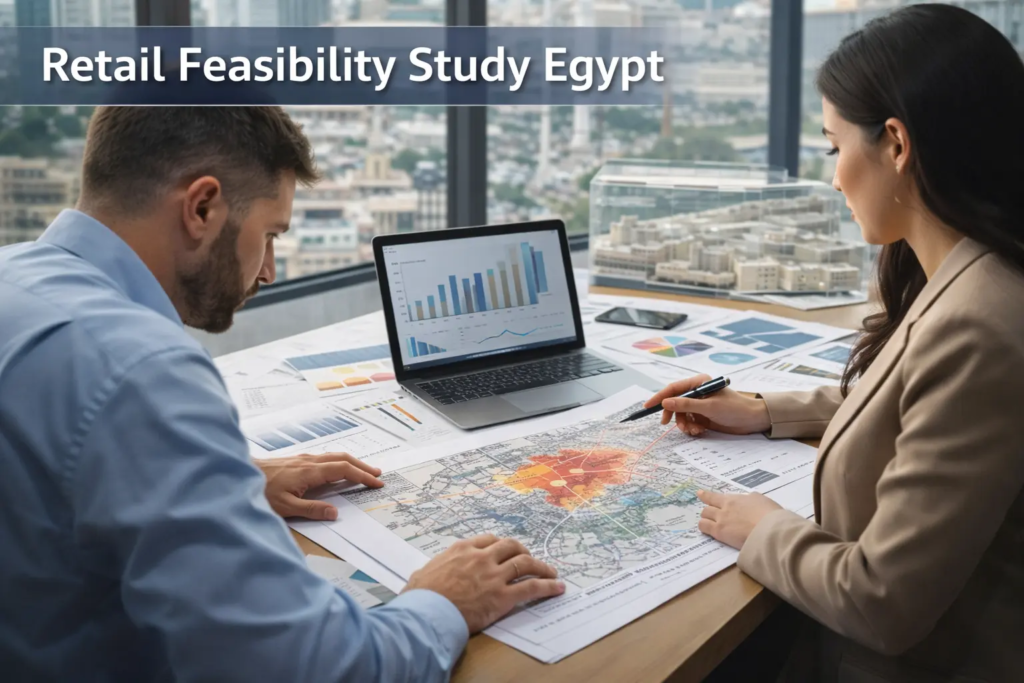
What Is a Retail Feasibility Study?
A retail feasibility study evaluates whether a proposed retail development is commercially sustainable. The process typically examines several factors:
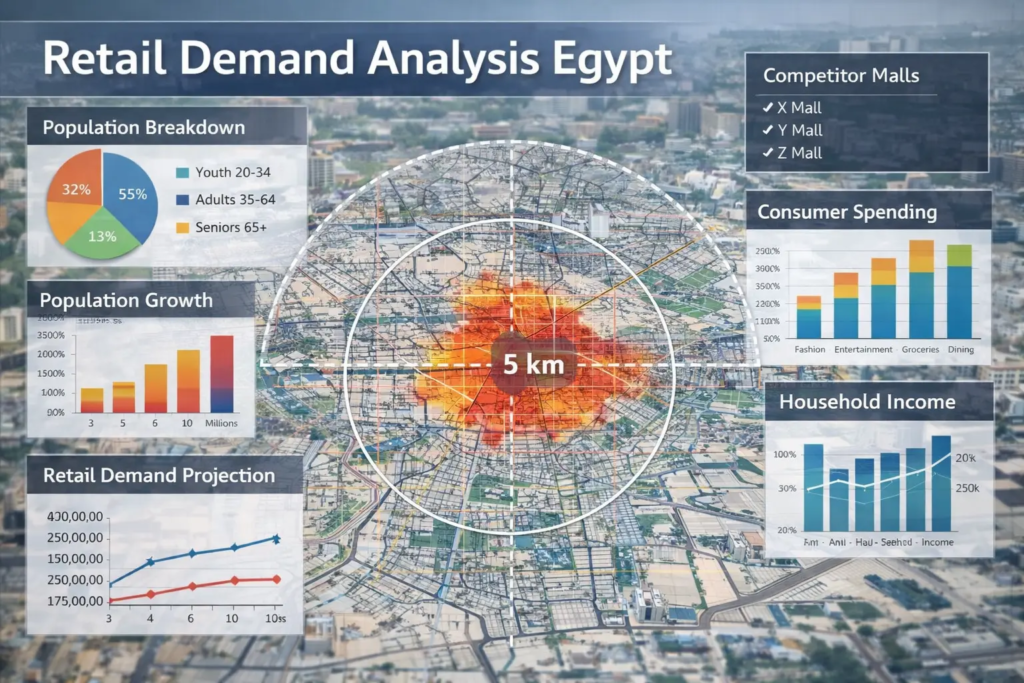
• Catchment population growth
• Consumer spending patterns
• Competing retail supply
• Accessibility and infrastructure
• Retail demand projections
By analysing these factors, developers can determine whether retail supply aligns with long-term market demand.
Why Retail Feasibility Matters in Emerging Markets
Emerging retail markets often experience rapid development cycles. While this creates opportunities, it can also introduce commercial risk if retail supply grows faster than consumer demand.
Retail feasibility analysis helps developers avoid common challenges such as:
• Oversupplied retail space
• Weak tenant demand
• Slow leasing absorption
By validating demand early, developers can protect long-term commercial performance.
Determining Sustainable Retail GLA
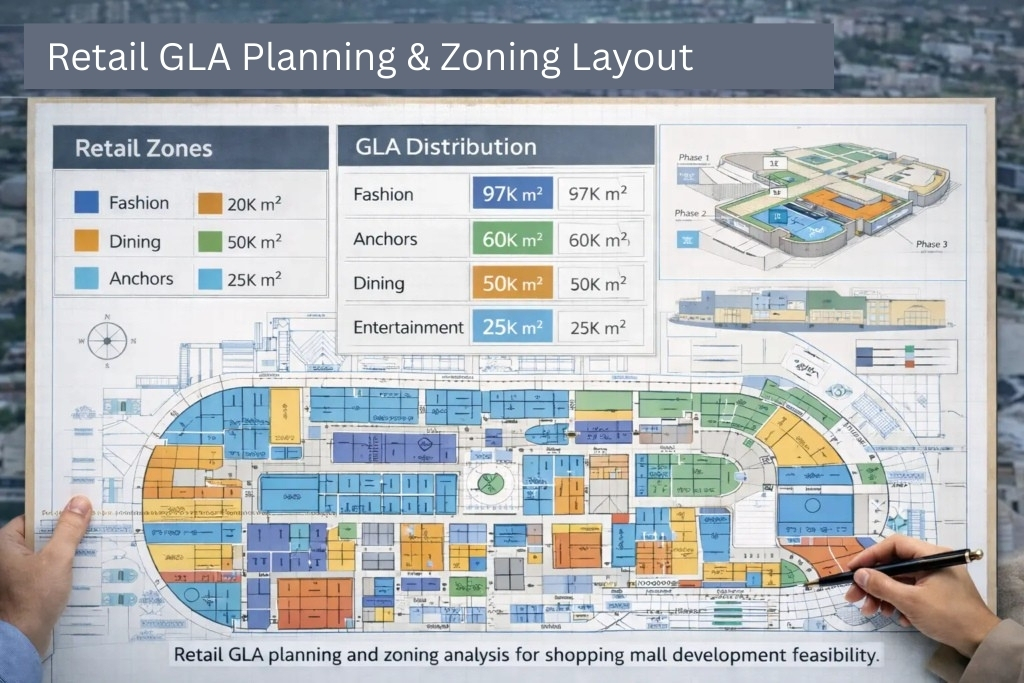
One of the most critical outputs of a feasibility study is identifying sustainable retail gross leasable area (GLA). Introducing excessive retail supply can dilute tenant performance and reduce long-term asset value. Retail feasibility helps determine:
• Appropriate retail scale
• Tenant mix potential
• Phased development strategy
This ensures retail supply aligns with future market growth.
How Retail Advisory Supports Development Decisions
Retail feasibility is rarely a standalone exercise. It often informs broader development decisions including tenant mix strategy, circulation planning, and retail hierarchy.
RLPC supports developers through structured retail feasibility advisory, evaluating retail demand and aligning commercial planning with long-term market dynamics.
This allows project teams to make informed decisions before committing to construction or leasing strategies.
Conclusion
Retail feasibility studies play an essential role in protecting investment value within emerging retail markets.
By validating demand, determining sustainable retail supply, and aligning development strategies with long-term market conditions, developers can significantly improve the commercial viability of retail projects in Egypt.
Through structured retail feasibility advisory, RLPC helps developers validate retail demand, determine sustainable retail GLA, and align retail developments with long-term market conditions.
Frequently Asked Questions
Retail feasibility studies analyse market demand, population growth, consumer spending patterns, and competing retail supply.
Retail feasibility helps determine sustainable retail supply and protects developments from oversupply.
Yes. Feasibility results often influence tenant mix planning, retail hierarchy, and commercial positioning.
Many developers conduct feasibility studies before construction to reduce commercial risk.