

Egypt’s retail landscape continues to evolve as new shopping centres and mixed-use developments emerge across Cairo and the New Administrative Capital.
While architectural design and location play important roles, the long-term success of shopping malls often depends on strategic planning decisions made during early development stages.
Developers increasingly seek specialist advisory support to structure commercial environments that remain viable as markets mature. RLPC works with developers to evaluate retail demand, tenant mix strategy, and circulation planning to help align mall developments with long-term commercial performance.
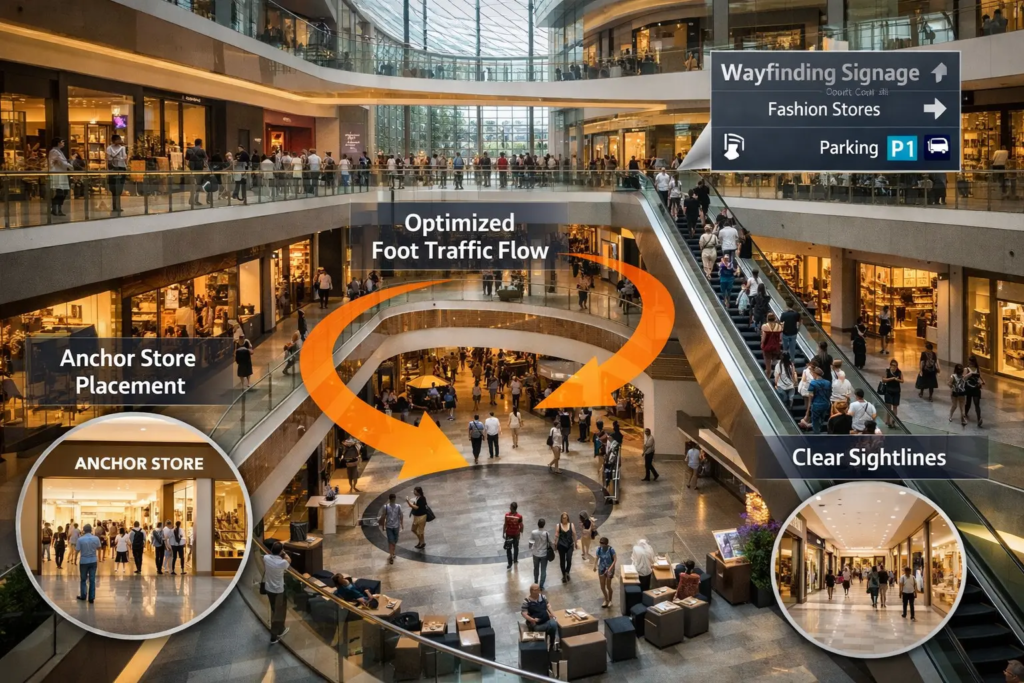
Overestimating Retail Demand
One of the most common challenges in emerging retail markets is overestimating retail demand.
Developers sometimes introduce large retail areas in early phases of development, expecting population growth to absorb commercial space.
However, when demand grows more slowly than anticipated, developments may experience vacant units and slow leasing absorption.
Retail feasibility analysis helps determine realistic retail supply by evaluating market demand and competitive environments.
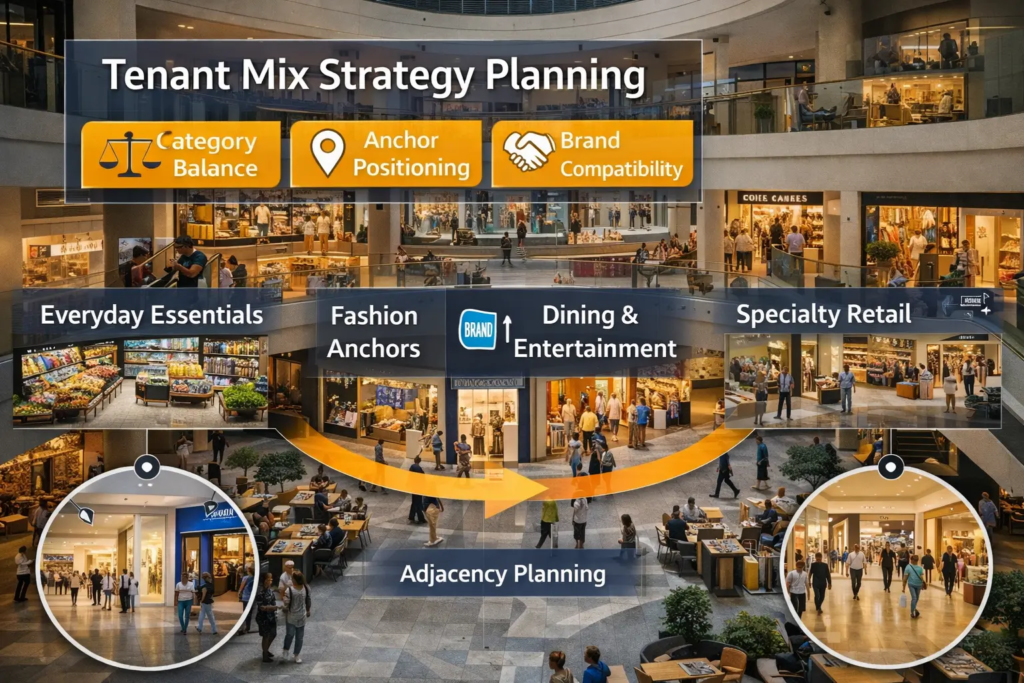
Weak Tenant Mix Strategy
Tenant mix planning plays a critical role in shaping mall performance.
When retail categories are poorly structured, malls may struggle to attract consistent customer visits.
Tenant mix planning typically considers:
- category balance
- anchor tenant positioning
- brand compatibility
- adjacency planning
A well-structured tenant mix allows different retail categories to complement each other.
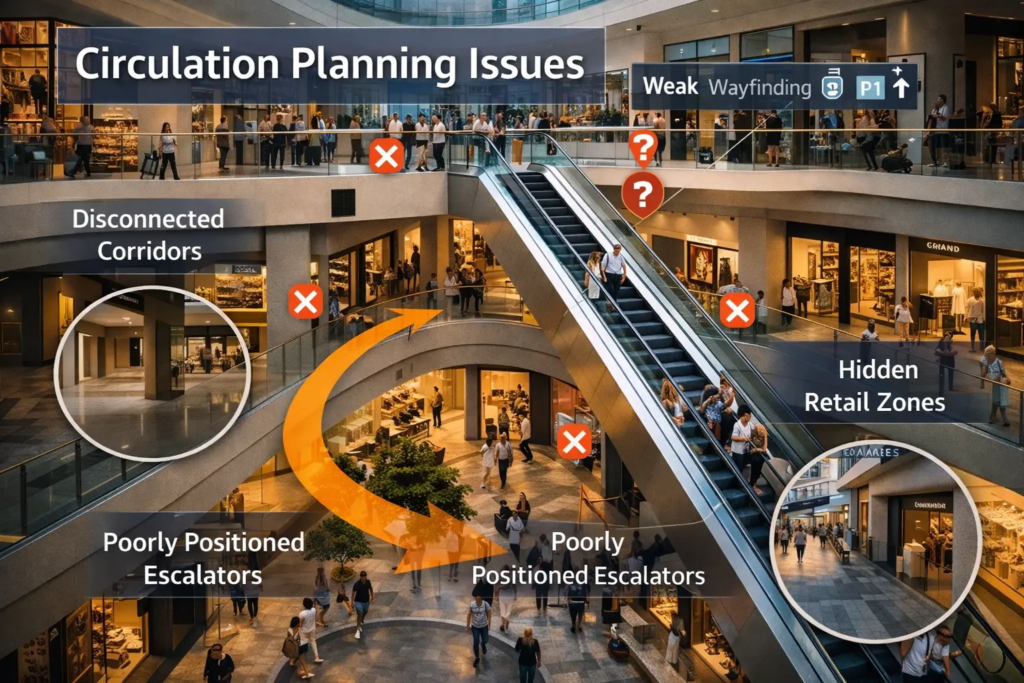
Poor Circulation and Visibility
Customer movement patterns strongly influence retail performance.
When circulation planning is weak, certain areas receive strong footfall while others remain underutilised.
Common issues include:
- disconnected corridors
- poorly positioned escalators
- hidden retail zones
- weak wayfinding systems
Strategic circulation planning helps distribute customer movement more evenly across retail environments.
Retail Delivered Too Early
In many developments, retail environments open before surrounding residential populations reach sufficient density.
Without an established catchment population, retailers may struggle to achieve sustainable performance during early years.
Phased retail delivery helps align commercial supply with development maturity.
How Retail Advisory Supports Mall Developments
Mall planning involves multiple interconnected decisions including demand validation, tenant mix planning, circulation strategy, and commercial positioning.
RLPC supports developers and asset owners through structured retail advisory that aligns mall planning with long-term commercial performance. By evaluating market demand and planning retail environments strategically, advisory input helps reduce the risk of underperforming retail assets.
Conclusion
Retail planning plays a critical role in determining whether shopping malls achieve sustainable commercial success.
By addressing demand validation, tenant mix strategy, and circulation planning early in the development process, developers can significantly improve the long-term performance of retail assets in emerging markets such as Egypt.
Strategic retail advisory from experienced consultants such as RLPC helps developers identify planning risks early, structure effective tenant mix strategies, and ensure shopping mall developments achieve long-term commercial sustainability.
Frequently Asked Questions
Retail underperformance often results from poor demand analysis, weak tenant mix planning, or ineffective circulation design.
Retail feasibility helps determine sustainable retail supply and reduces the risk of oversupply.
Yes. Effective circulation planning helps distribute footfall and improve tenant visibility.
Large developments often benefit from specialist retail advisory to align planning decisions with long-term commercial performance.