


Across the Middle East and emerging retail markets, developers increasingly recognise that mall performance is no longer determined by size alone.
Today, long-term commercial success depends heavily on how retail environments are structured, positioned, and curated.
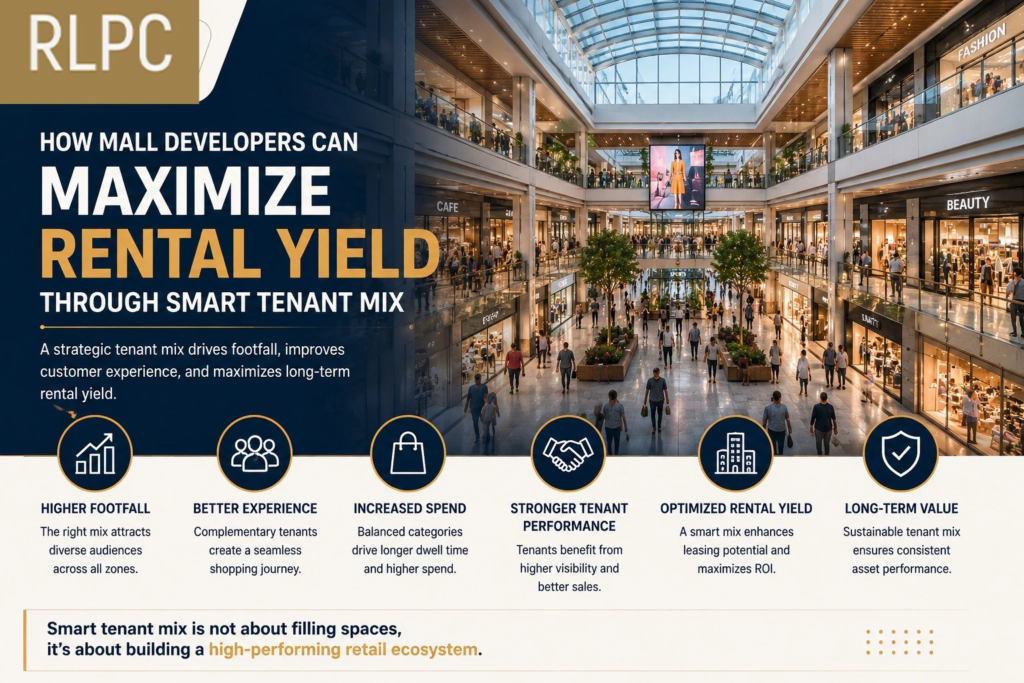
One of the most influential factors behind rental performance is the tenant mix strategy.
A well-planned tenant mix does more than fill vacant units; it shapes customer movement, strengthens dwell time, improves leasing stability, and ultimately increases rental yield across the asset. RLPC works with developers and retail asset owners to structure tenant mix strategies that align leasing decisions with long-term commercial performance and evolving consumer behaviour.
Why Tenant Mix Directly Impacts Rental Yield
Many developers initially approach leasing with a short-term occupancy mindset.
However, maximising occupancy does not automatically maximise profitability.
When tenant categories are poorly balanced, malls often experience the following:
- uneven footfall distribution
- weak repeat visitation
- declining tenant sales performance
- rental pressure in secondary zones
Strategic tenant mix planning helps create stronger commercial ecosystems where retailers complement each other rather than compete inefficiently.
This improves both tenant sustainability and long term rental performance.
The Difference Between Leasing and Tenant Mix Strategy
Leasing focuses on filling space.
The tenant mix strategy focuses on structuring commercial performance.
This includes evaluating the following:
- category balance
- anchor tenant positioning
- adjacency relationships
- target customer demographics
- dwell time generation
For example, placing high-frequency convenience retail near lifestyle categories can improve cross-shopping behaviour and strengthen secondary retail zones.
How Smart Tenant Mix Improves Footfall Quality
Not all footfall creates value.
High-performing malls focus on attracting commercially productive visitors rather than simply increasing visitor volume.
Effective tenant mix planning helps:
- increase repeat visits
- improve customer journey flow
- strengthen spending behaviour
- activate underperforming zones
Retail categories such as food and beverage, entertainment, and experiential retail increasingly play a major role in extending dwell time and improving overall mall engagement.
Anchor Tenant Positioning Matters
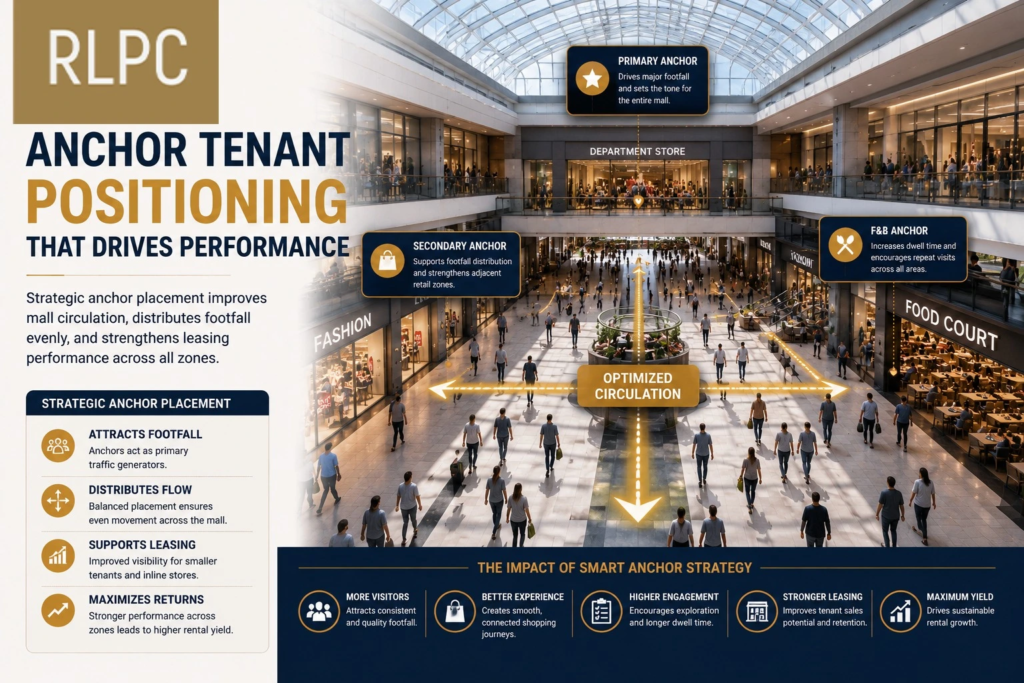
Anchor tenants influence customer movement patterns across the mall.
Poorly positioned anchors can create isolated traffic pockets while leaving surrounding zones underutilised.
Strategic anchor positioning helps:
- distribute footfall more evenly
- support secondary leasing zones
- improve visibility across corridors
- strengthen rental sustainability
Developers increasingly use circulation and adjacency analysis to optimise anchor placement within large retail environments.
Balancing Luxury, Lifestyle, and Convenience Retail
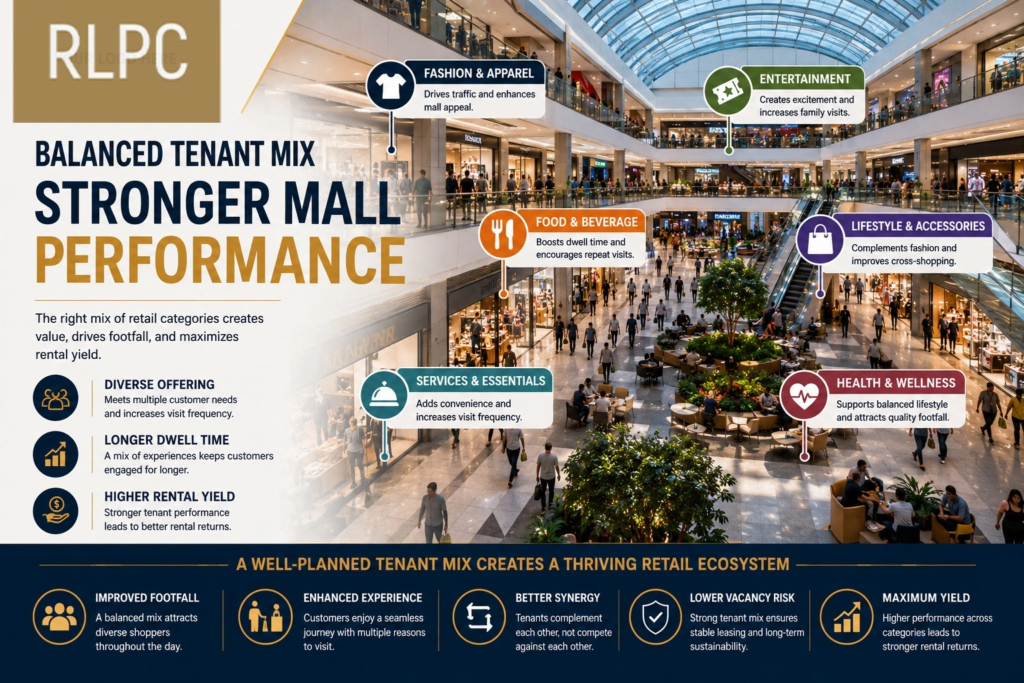
One of the most common retail planning mistakes is introducing incompatible retail categories within the same environment.
Successful tenant mix strategies balance:
- destination retail
- lifestyle categories
- convenience services
- food and beverage
- entertainment functions
This creates multiple visit motivations while reducing dependency on a single retail segment.
Balanced retail ecosystems typically produce more stable leasing performance over time.
How Tenant Mix Strategy Supports Long-Term Asset Value
Tenant mix strategy influences more than leasing performance.
It also impacts:
- asset positioning
- investor confidence
- customer perception
- long-term rental growth
- commercial resilience during market shifts
As retail markets evolve, flexible and strategically structured tenant mixes allow malls to adapt more effectively to changing consumer expectations.
How RLPC Supports Tenant Mix Strategy
Tenant mix planning requires more than selecting popular brands.
RLPC supports developers through structured retail advisory that evaluates:
- market demand
- customer profiles
- circulation behaviour
- retail hierarchy
- leasing sustainability
By aligning tenant mix with long term commercial strategy, RLPC helps developers improve rental yield while reducing operational and leasing risk.
Conclusion
Mall performance is increasingly shaped by the quality of retail planning decisions rather than the quantity of retail space alone. Developers who structure tenant mix strategically are better positioned to improve rental yield, strengthen tenant performance, and create commercially sustainable retail environments.
As consumer expectations continue evolving, a smart tenant mix strategy will remain one of the most critical drivers of long term retail asset success.
Through strategic tenant mix advisory, RLPC helps developers structure retail environments that improve rental performance, strengthen customer engagement, and support long-term commercial value.
Frequently Asked Questions
Tenant mix strategy refers to the planning and balancing of retail categories within a mall to improve customer experience and commercial performance.
A strong tenant mix improves footfall quality, tenant sales performance, and leasing stability, which supports stronger rental returns.
Anchor tenants influence customer movement and help distribute footfall across retail environments.
Yes. Strategic category placement and adjacency planning can help activate weaker retail areas.
Food and beverage, entertainment, and experiential retail categories often increase customer dwell time.
Yes. Mixed-use environments require coordinated tenant mix strategies to align retail with residential, office, and leisure demand.