


Egypt’s retail and mixed-use development sector continues to expand, driven by new urban cities, infrastructure investments, and growing consumer demand.
However, not all retail developments achieve long-term success.
In many cases, the difference between a high-performing asset and an under-performing project lies in one critical stage, feasibility analysis.
A retail feasibility study is not just a financial exercise. It is a strategic evaluation that determines whether a retail concept aligns with market demand, cost structures, and long-term investment returns. RLPC works with developers and investors to structure feasibility frameworks that go beyond basic projections, ensuring retail developments are aligned with real market conditions in Egypt.
What Is a Retail Feasibility Study from an Investment Perspective?
A retail feasibility study evaluates whether a proposed retail development is financially and commercially viable before capital is committed.
From an investment standpoint, it focuses on key questions such as the following:
• What is the total development cost?
• What revenue potential can be achieved?
• What is the expected return on investment (ROI)?
• What risks could impact financial performance?
This approach ensures that retail developments are not only aligned with market demand but also structured for long-term profitability
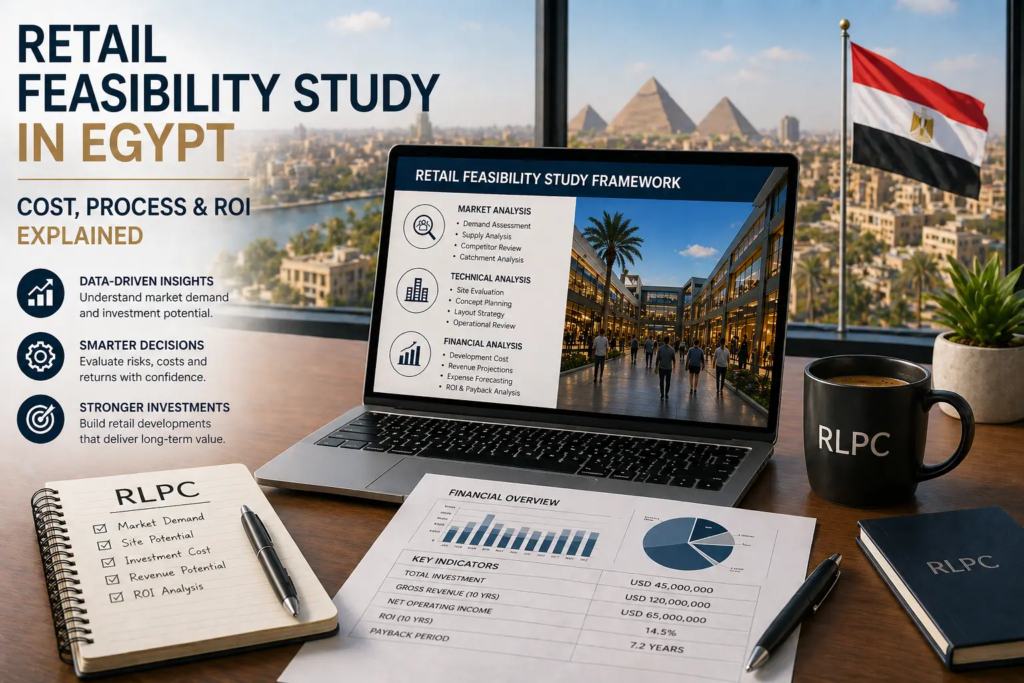
Key Components of a Retail Feasibility Study
A structured feasibility study typically includes three core layers:
1. Market Analysis
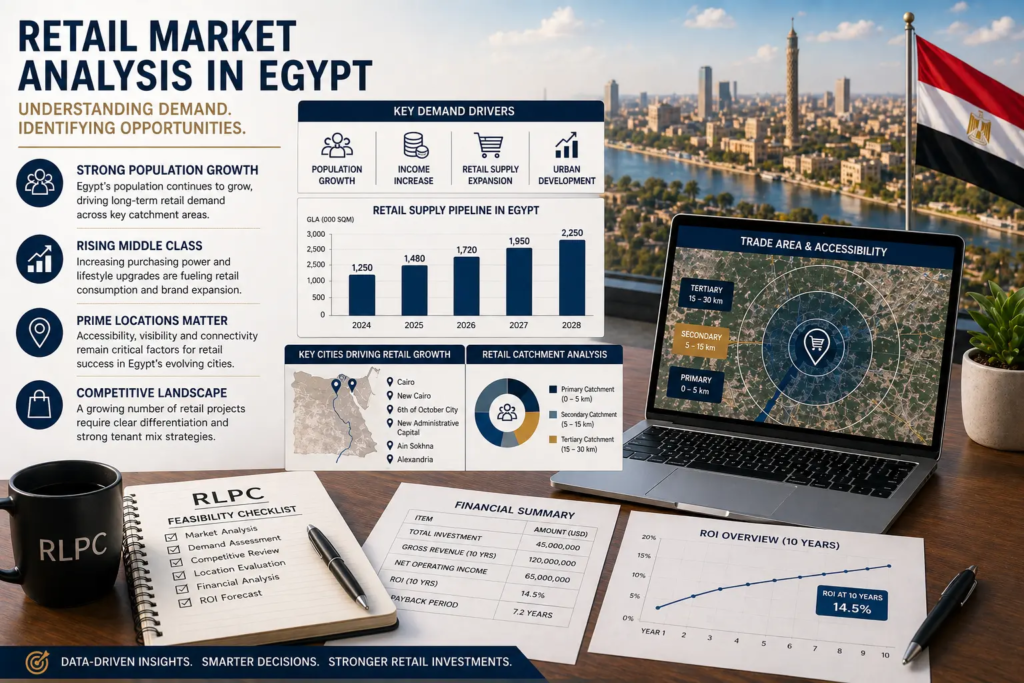
- demand and supply assessment
- competitor benchmarking
- catchment population analysis
2. Technical Analysis
- location planning
- retail layout strategy
- operational requirements
3. Financial Analysis
- development cost
- operating expenses
- revenue projections
- ROI calculation
These components collectively determine whether a project is sustainable and scalable. For a deeper understanding of how feasibility studies validate market demand, catchment potential, and long-term retail performance, refer to our detailed guide on retail feasibility for mall investments in Egypt.
Cost of Retail Feasibility Study in Egypt
The cost of conducting a feasibility study in Egypt can vary depending on:
- project size
- level of analysis
- data depth
- consultancy expertise
Typically, feasibility studies can range from:
👉 a few thousand to tens of thousands of dollars, depending on complexity
However, the cost of not conducting a proper study is significantly higher, often leading to:
- oversupply
- poor tenant demand
- underperforming assets
Process of Retail Feasibility Study
A structured feasibility process follows multiple stages:
Step 1: Market Understanding
- analyse demand and competition
Step 2: Concept Evaluation
- define retail positioning
- identify target audience
Step 3: Financial Modeling
- estimate costs and revenue
- calculate ROI and payback
Step 4: Risk Assessment
- identify market and operational risks
Step 5: Strategic Recommendations
- define retail scale
- optimize tenant mix
This structured approach is typically used by specialised retail advisory firms, such as RLPC, which combine market analysis, financial modelling, and retail strategy to ensure development decisions are commercially sustainable.
This process ensures investment decisions are based on data rather than assumptions.
ROI in Retail Developments: What to Expect
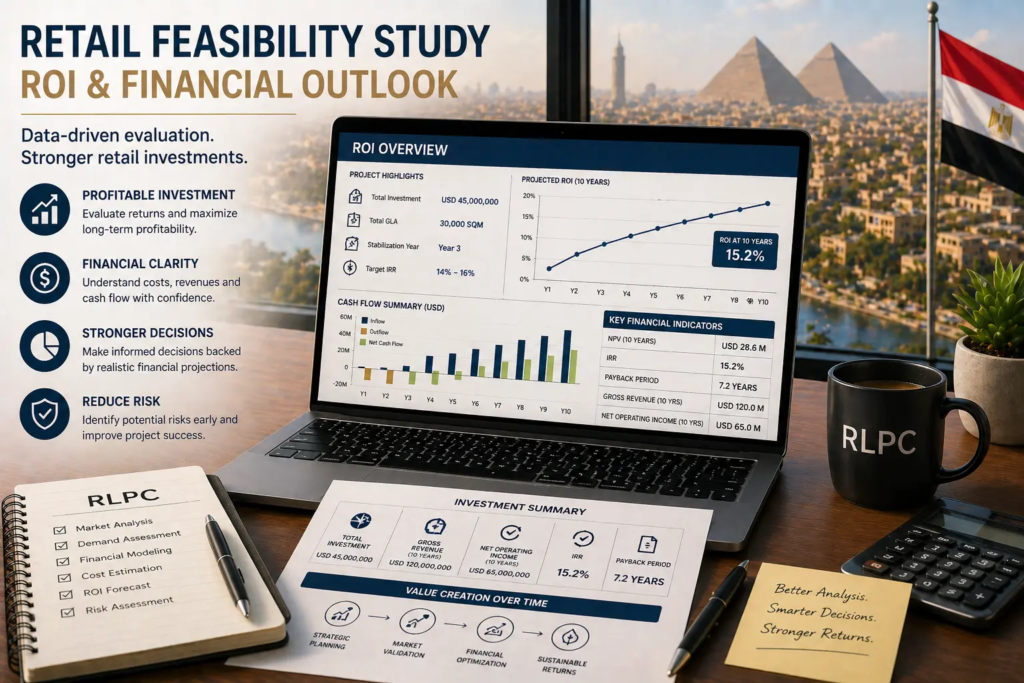
Return on investment (ROI) is one of the most critical outputs of a feasibility study.
Retail feasibility typically evaluates:
- payback period
- long-term revenue potential
- profitability sustainability
In some project studies in Egypt, ROI levels can be significant depending on sector and execution, with payback periods often structured across multi-year timelines.
However, ROI is highly dependent on:
- tenant mix
- location
- demand alignment
- development phasing
Why Many Retail Projects Fail Without Feasibility
Without structured feasibility analysis, developers often face the following:
- demand overestimation
- incorrect retail sizing
- weak tenant performance
- delayed commercial stabilisation
Feasibility studies help identify these risks early and reduce investment uncertainty.
How RLPC Supports Retail Feasibility in Egypt
Retail feasibility is not just about numbers; it is about interpreting market behaviour.
RLPC supports developers through:
- demand validation
- retail positioning strategy
- tenant mix structuring
- financial scenario modelling
By aligning feasibility analysis with real market dynamics, RLPC helps ensure that retail developments are positioned for long-term commercial success.
When Should Developers Conduct a Feasibility Study?
Retail feasibility studies should be conducted at multiple critical stages of the development lifecycle to minimise risk and ensure informed decision-making.
Key stages include:
• Before land acquisition
To validate whether the location has sufficient demand, catchment potential, and long-term retail viability.
• Before design finalisation
To ensure that retail layout, scale, and tenant mix align with actual market demand and consumer behaviour.
• Before leasing strategy development
To position the asset correctly, attract the right tenant categories, and optimise commercial performance.
Conducting feasibility at these stages helps developers avoid costly mistakes and ensures that retail developments are aligned with both market demand and financial expectations. Structured advisory firms such as RLPC typically integrate feasibility insights across these stages to align development strategy with real market conditions.
Conclusion
Retail feasibility studies play a critical role in shaping successful retail developments in Egypt. By evaluating market demand, cost structures, and return potential, developers can make informed investment decisions and reduce long-term risk.
Through structured retail feasibility advisory, RLPC helps developers evaluate market demand, optimise retail strategy, and ensure sustainable commercial performance across developments in Egypt.
Frequently Asked Questions
A retail feasibility study evaluates whether a retail project is viable based on market demand, costs, and expected returns.
Costs vary depending on project complexity, typically ranging from a few thousand to tens of thousands of dollars.
It includes market analysis, technical planning, and financial projections.
It helps reduce risk, validate demand, and improve long-term commercial performance.
ROI is calculated based on projected revenue, investment cost, and long-term profitability.
Yes. Most developers rely on feasibility studies to make informed investment decisions and avoid costly mistakes.