


Across the Middle East, Egypt, and emerging retail markets, developers are investing heavily in large-scale retail and mixed-use environments.
Yet, many projects underperform, not because of demand, but because of how retail space is structured internally.
Footfall does not move randomly.
It follows patterns shaped by layout, visibility, and zoning decisions.
Retail zoning strategy plays a critical role in determining:
- Where customers move
- How long they stay
- Where they spend
RLPC works with architects and mall planners to align zoning strategy with commercial performance, ensuring retail layouts are designed not just for aesthetics but for measurable outcomes.
What Is Retail Zoning Strategy?
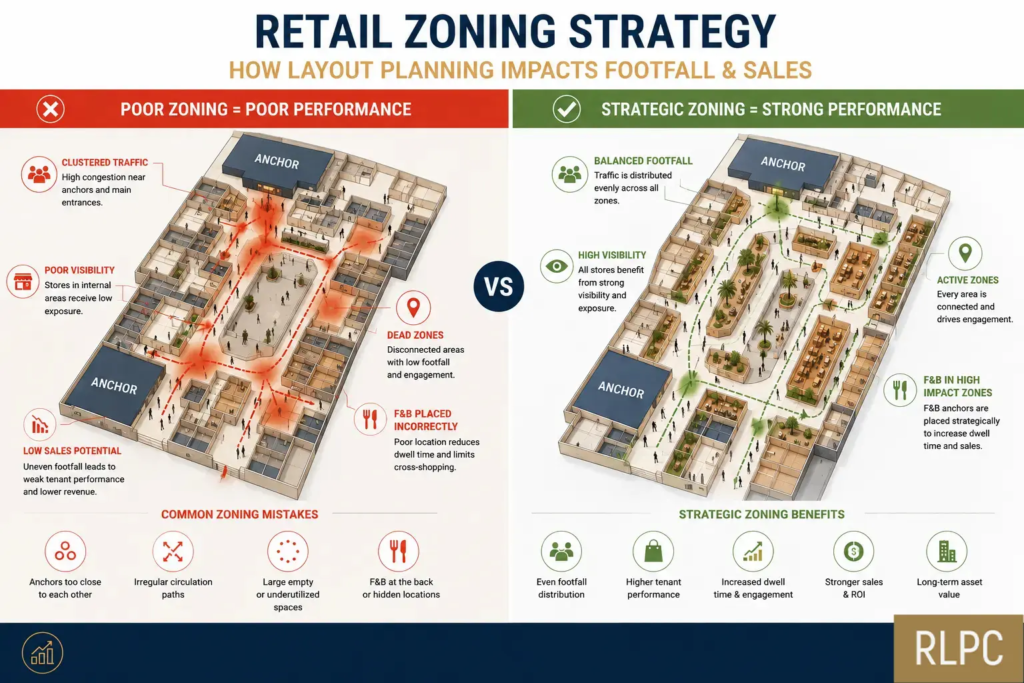
Retail zoning strategy refers to the structured allocation of retail categories across a development to influence customer movement and commercial performance.
It defines:
- where anchor tenants are placed
- how categories are distributed
- how customer flow is guided
- which zones receive priority visibility
Rather than treating all retail space equally, zoning creates a hierarchy of commercial importance.
Why Does Layout Planning Directly Impact Footfall?
Footfall is not evenly distributed across a mall.
Without structured zoning, most developments experience:
- high traffic concentration in limited areas
- underperforming corridors
- isolated retail pockets
- inefficient customer circulation
Layout planning determines how easily customers navigate the space.
When zoning aligns with natural movement patterns, footfall becomes the following:
- more evenly distributed
- commercially productive
- sustainable over time
Anchor Placement: The Core Driver of Movement
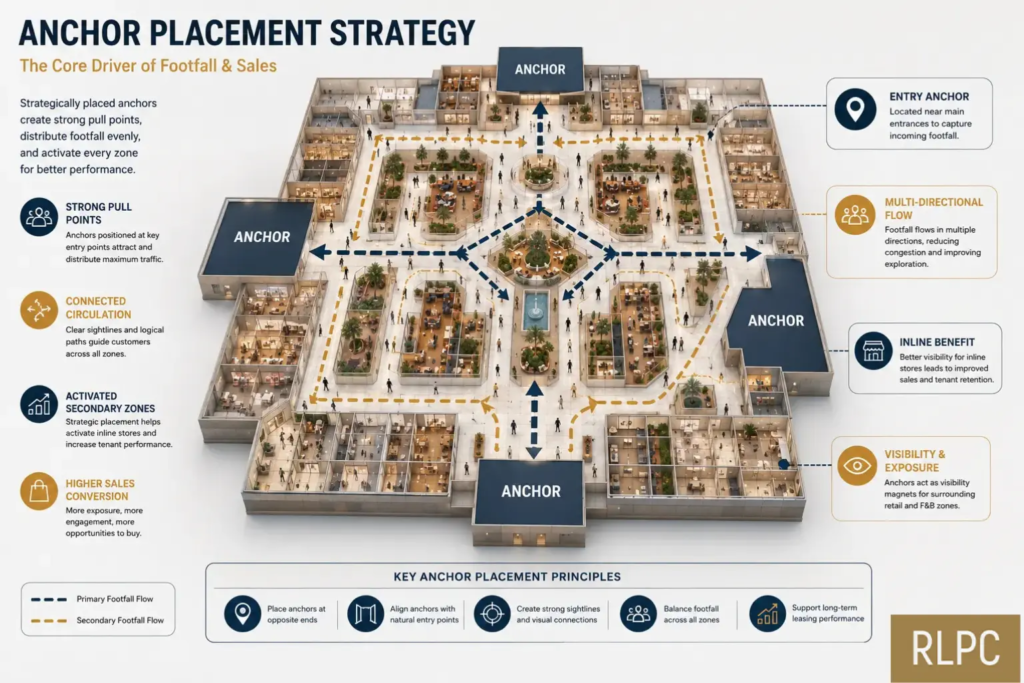
Anchor tenants act as primary traffic generators.
However, placing anchors incorrectly can create imbalance rather than value.
Effective anchor placement:
- pulls customers across multiple zones
- activates deeper retail corridors
- reduces reliance on central atriums
- supports secondary leasing areas
In many underperforming malls, anchors are clustered, leading to strong zones and weak zones within the same asset.
F&B Zoning and Dwell Time Optimisation
Food and beverages are no longer just a support category.
It plays a central role in:
- increasing dwell time
- creating social interaction spaces
- encouraging repeat visits
However, F&B placement requires careful planning.
Poorly positioned F&B zones can:
- isolate customer flow
- create congestion
- reduce visibility for surrounding retailers
Strategically placed F&B clusters help extend customer journeys and improve overall retail engagement.
Understanding and Eliminating Dead Zones
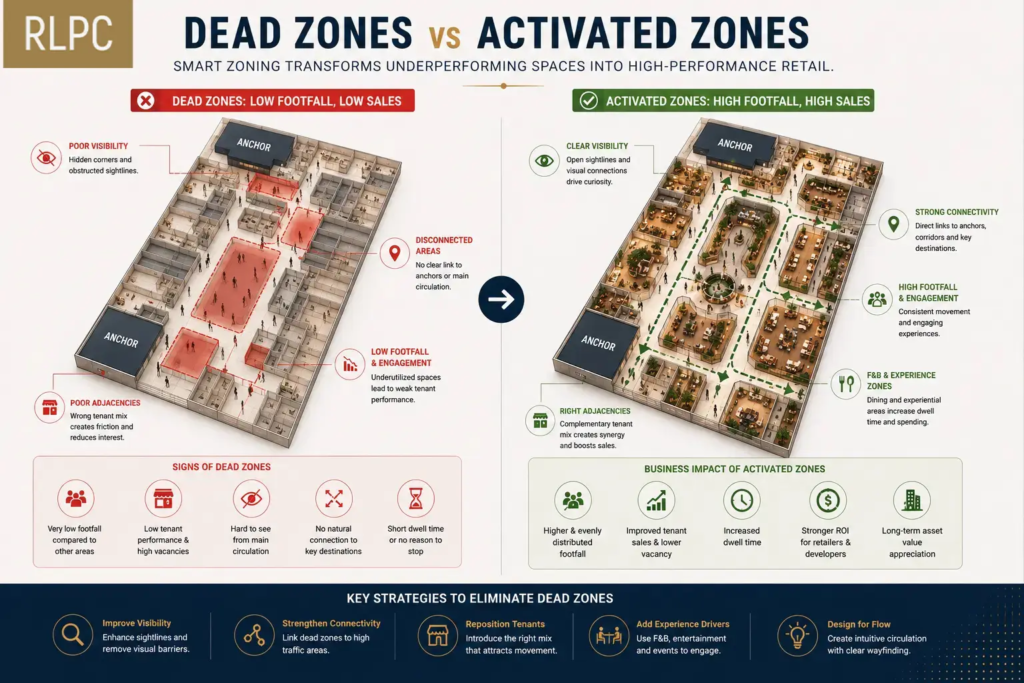
Dead zones are areas within a retail environment that receive low footfall and weak commercial activity.
They are often caused by:
- poor visibility
- weak anchor influence
- disconnected circulation paths
- improper zoning decisions
Dead zones not only impact tenant performance but also reduce overall asset value.
Retail zoning strategy helps identify and correct these areas through:
- repositioning categories
- improving adjacency planning
- enhancing circulation flow
Zoning Strategy in Mixed-Use Developments
In mixed-use environments, zoning becomes even more complex.
Retail must align with:
- residential catchments
- office traffic patterns
- hospitality flows
- transport connectivity
Without integrated zoning, developments often fail to convert the surrounding population into active retail demand.
How RLPC Supports Retail Zoning Strategy
Retail zoning is not just a design decision; it is a commercial strategy.
RLPC supports architects and developers through:
- circulation analysis
- zoning hierarchy planning
- anchor positioning strategy
- tenant mix alignment
- footfall optimisation modelling
By aligning layout planning with real consumer behaviour, RLPC helps ensure that retail environments perform as intended.
Conclusion
Retail performance is shaped long before leasing begins.
Zoning decisions made during planning directly influence how customers move, engage, and spend.
Developers who treat zoning as a strategic tool rather than a design afterthought are better positioned to:
- improve footfall distribution
- increase tenant performance
- maximise long-term asset value
With strategic retail zoning advisories, RLPC helps architects and developers design layouts that increase foot traffic, improve leasing performance, and strengthen long-term commercial results.
Frequently Asked Questions
Retail zoning is the strategic placement of retail categories to influence customer flow and commercial performance.
Zoning directs customer movement across the mall, ensuring balanced traffic distribution.
Dead zones are low-traffic areas caused by poor layout planning or weak anchor positioning.
Anchor tenants drive movement and influence how customers navigate retail environments.
F&B zones increase dwell time and improve customer engagement, leading to higher spending.
Yes. Zoning directly impacts commercial success and must be integrated into early design stages.