


Retail success is often measured through footfall, sales performance, and tenant demand. However, behind every successful retail environment lies a deeper understanding of one critical factor: shopper behaviour.
People do not interact with retail spaces randomly. Their decisions, movement patterns, dwell time, and purchasing habits are influenced by a combination of psychology, convenience, environment, and experience. Understanding these behaviours is essential for developers, mall owners, and retailers seeking to create high-performing retail destinations.
What Is Shopper Behaviour?
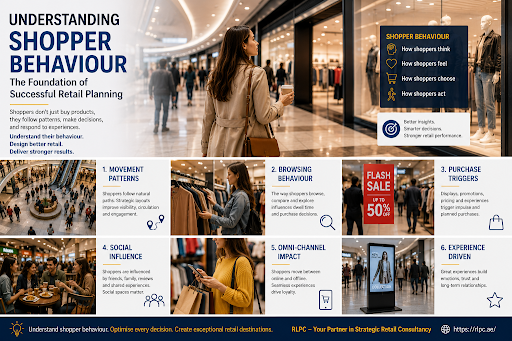
Shopper behaviour refers to how customers move, browse, compare, and make purchasing decisions within a retail environment. It goes beyond what people buy and focuses on why they buy, how they shop, and what influences their decisions.
Factors that shape shopper behaviour include:
- Personal preferences and lifestyle
- Convenience and accessibility
- Store visibility and location
- Product presentation
- Social and cultural influences
- Promotions and pricing strategies
Successful retail environments are designed around these behavioural patterns rather than assumptions.
Why Shopper Behaviour Matters in Retail Planning
Many retail developments focus heavily on physical design while overlooking how people actually interact with the space.
Understanding shopper behaviour helps improve:
- Customer experience
- Tenant performance
- Footfall distribution
- Dwell time
- Commercial returns
This is why strategic retail consultancy plays a crucial role during the planning and optimization of retail environments. Through detailed analysis of customer movement and engagement patterns, developers can make more informed decisions about layouts, tenant placement, and circulation strategies.
Common Shopper Behaviour Patterns in Retail Environments
Purpose-Driven Shopping
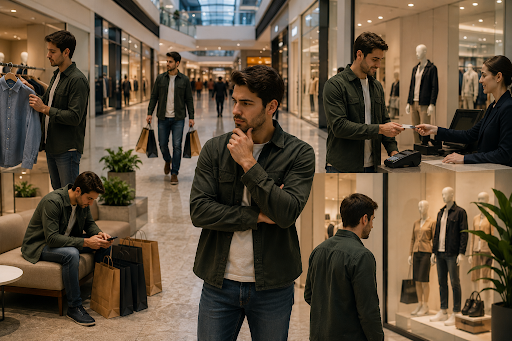
Some shoppers enter a mall with a clear objective. They know what they want, where to find it, and aim to complete their visit quickly.
These shoppers value:
- Easy navigation
- Convenient access
- Efficient store layouts
Retail environments must support this behavior without creating unnecessary friction.
Exploratory Shopping
Not every visit begins with a purchase intent.
Many customers enjoy browsing, comparing options, and discovering new products before making a decision. These shoppers often contribute to longer dwell times and higher engagement across multiple retail zones.
This is why effective retail planning focuses on creating environments that encourage exploration while maintaining logical customer flow.
Impulse Purchasing
Many purchases occur unexpectedly.
Visual merchandising, storefront design, product placement, and promotional displays often influence customers to make unplanned purchases.
Understanding these triggers allows retailers to improve conversion opportunities throughout the customer journey.
Social Shopping
For many people, shopping is a social activity rather than a transactional one.
Families, friends, and couples often influence each other’s purchasing decisions. Food courts, entertainment zones, and seating areas play an important role in extending dwell time and encouraging repeat visits.
The Role of Retail Design in Shopper Behaviour
Retail design and shopper behaviour are closely connected.
The placement of anchors, tenant mix, pathways, and gathering spaces all influence how customers move through a development.
Effective retail environments consider:
- Customer circulation patterns
- Visibility of retail units
- Tenant adjacencies
- Rest and social interaction zones
- Accessibility and convenience
These elements help create a seamless shopping experience while maximizing commercial performance.
How Retail Consultancy Helps Decode Shopper Behaviour
Understanding shopper behaviour requires more than observation. It requires structured analysis and strategic planning.
Through professional retail consultancy services, developers can identify:
- Underperforming zones
- Footfall bottlenecks
- Tenant mix gaps
- Customer journey challenges
- Opportunities to improve engagement
At RLPC, we work with developers, mall owners, and retail stakeholders to align retail environments with real customer behaviour. Our approach combines retail strategy, tenant mix planning, circulation analysis, and performance optimization to create stronger retail destinations.
Explore our retail consultancy services:
https://rlpc.ae/
Conclusion
Shopper behaviour influences every aspect of retail performance. From the moment a customer enters a retail environment to the point of purchase, their decisions are shaped by design, experience, convenience, and psychology.
Developments that understand these patterns are better positioned to improve customer engagement, optimize tenant performance, and create sustainable commercial success.
In today’s competitive retail landscape, understanding shopper behaviour is no longer optional. It is the foundation of effective retail planning and long-term asset performance.