


Abu Dhabi’s retail market is often viewed through the same lens as other major cities in the UAE. However, retail performance in Abu Dhabi follows a distinct pattern shaped by its demographics, lifestyle, and long-term residential behavior.
Unlike fast-paced, high-turnover markets, Abu Dhabi operates with a more stable and structured demand base. For developers and asset owners, understanding these differences is essential to building retail environments that perform consistently over time.
A Market Driven by Stability, Not Speed
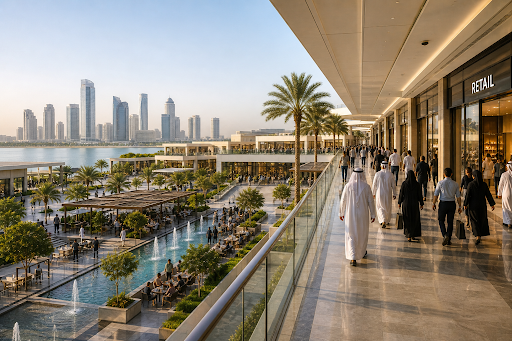
Retail in Abu Dhabi is not defined by rapid shifts or short-term trends. Instead, it is driven by a stable population base with predictable behavior patterns.
Customers tend to:
- visit familiar locations regularly
- prioritize convenience and accessibility
- spend based on planned needs rather than impulse
This creates a retail environment where performance is less volatile but requires stronger alignment with long-term demand.
Why Catchment Behavior Plays a Central Role
One of the most important factors influencing retail performance in Abu Dhabi is catchment behavior.
Each retail development attracts a specific audience, and their characteristics define how the space will perform.
Key considerations include:
- residential density around the development
- income levels and spending capacity
- accessibility and travel patterns
When retail planning does not align with these factors, even well-designed spaces may struggle to generate consistent engagement.
The Role of Tenant Mix in Sustaining Performance
Tenant mix in Abu Dhabi requires a balanced approach.
Unlike highly dynamic markets, where constant brand rotation may work, Abu Dhabi benefits from:
- stable, reliable retail categories
- strong presence of essential services
- carefully integrated F&B offerings
Overemphasis on aspirational or trend-driven brands can create gaps in performance, especially if they do not align with local demand.
A well-structured tenant mix ensures:
- repeat visits
- consistent footfall
- long-term tenant sustainability
Movement, Accessibility, and Layout Efficiency
Customer movement in Abu Dhabi malls tends to be more purposeful.
Visitors often arrive with clear intent rather than exploratory behavior. This makes circulation planning and accessibility even more important.
Retail environments must ensure:
- easy navigation between key zones
- clear visibility of stores
- efficient access to anchors and services
When movement is not well-planned, customers tend to limit their journey, reducing overall engagement within the mall.
Common Gaps That Impact Retail Performance
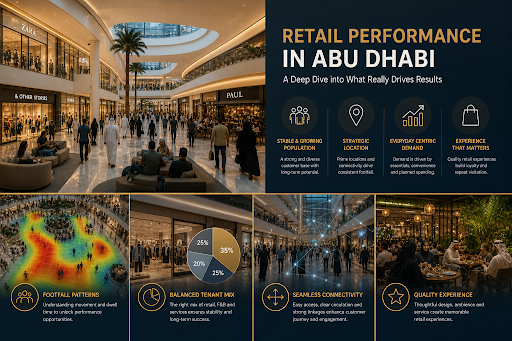
In many retail developments, underperformance is not caused by lack of demand but by misalignment in planning.
Typical challenges include:
- tenant mix not aligned with catchment needs
- underutilized zones within the mall
- weak connectivity between retail areas
- over-reliance on high-end positioning without supporting demand
These gaps often develop gradually and impact long-term performance if not addressed early.
A More Structured Approach to Retail Strategy
To improve retail performance in Abu Dhabi, a more structured and localized approach is required.
This includes:
- detailed catchment analysis
- careful tenant mix planning
- circulation optimization
- alignment with everyday customer behavior
Developments that follow this approach are better equipped to deliver stable and sustainable performance.
Conclusion
Retail performance in Abu Dhabi is not driven by short-term trends or high-intensity activity. It is shaped by stability, consistency, and alignment with real customer behavior.
Understanding how the market operates allows developers to move beyond assumptions and create retail environments that perform reliably over time.
Explore More
For detailed insights into retail strategy in Abu Dhabi, visit:
https://rlpc.ae/retail-consultancy-in-abu-dhabi/